I'm Already on Hormone Therapy, But It Still Doesn't Feel Right
Man, that's frustrating.
You feel like you're doing all the right things. You have a good bedtime routine. You're working out. You're eating well. Maybe you're even taking the magnesium and creatine everyone keeps talking about, and yet something still feels off. You started hormone therapy because you thought this was finally going to be the thing that made you feel like yourself again, but you still don't.
Here's something I warn my patients about from the beginning: hormones are not always quick, and they're definitely not one-size-fits-all.
I wish I could hand every woman the same estrogen patch and progesterone prescription and tell her exactly how she's going to feel in a few weeks, but that just isn't how this works. It takes time, patience, and sometimes a fair amount of trial and error and tinkering to figure out what works best for you.
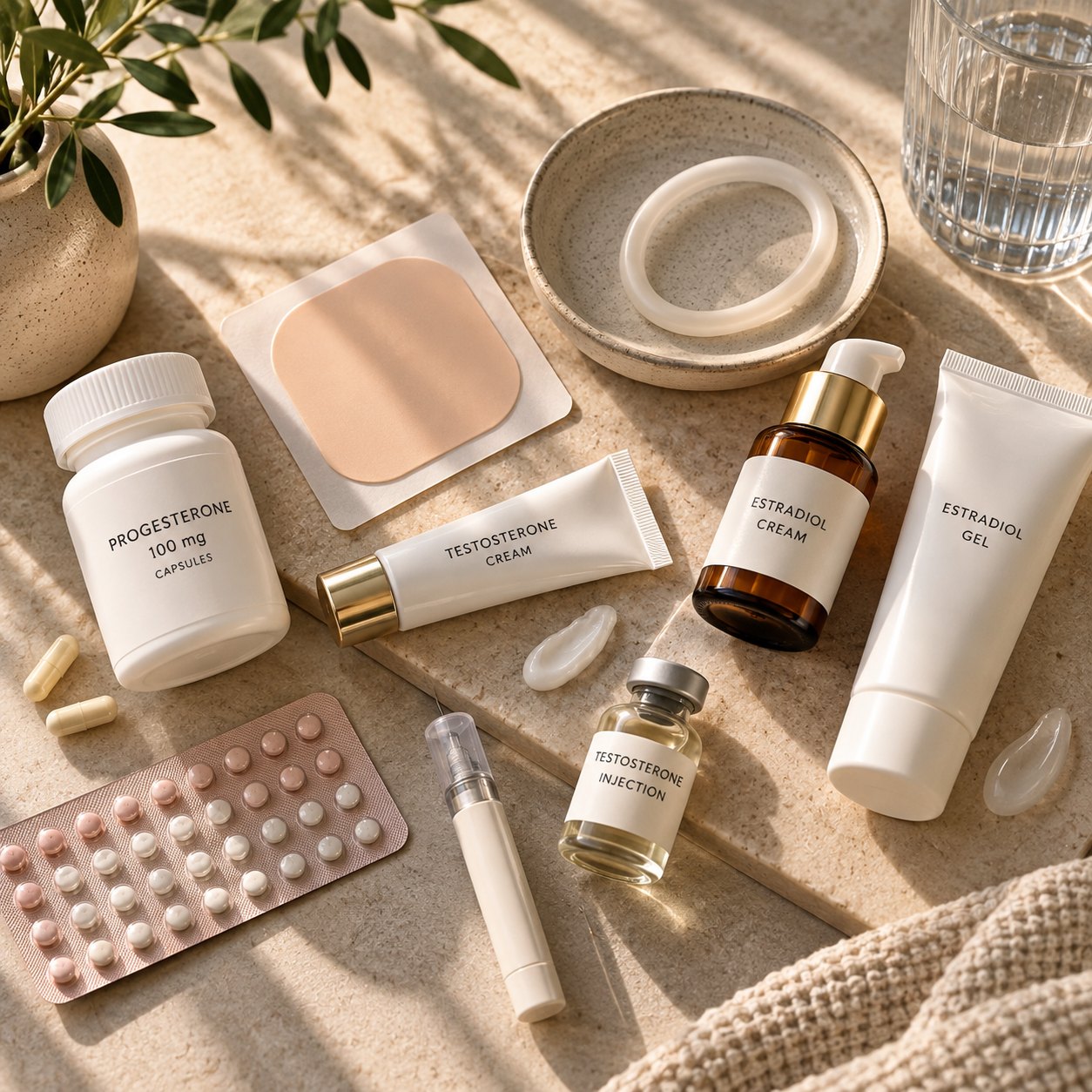
Some women do beautifully on an estradiol patch and oral micronized progesterone. Others simply do not tolerate micronized progesterone well. They may feel groggy, bloated, moody, or just not right. And that's okay, because there are other options.
This is especially important right now because there is so much talk on social media about "bioidentical" hormones being the best way to do hormone therapy. Micronized progesterone is a great option for many women, but just because something is bioidentical doesn't automatically mean it is the best choice for your body.
Just because something is bioidentical doesn't automatically mean it is the best choice for your body.
This is where seeing a Menopause Society Certified Practitioner can really matter. We've trained on the different options available, not just the ones that happen to be popular right now. You want someone who isn't going to throw in the towel because the first thing you tried didn't work, but you also want someone who is realistic with you. Some symptoms improve quickly. Others take longer. Sometimes we need to adjust the dose, change the route, or try a different form of progesterone before we find what works.
I also hear from a lot of women in their early 40s who were told that because they're still getting periods, they should just go on birth control. Birth control can absolutely be a good option during perimenopause, especially if you need contraception or cycle control, but it isn't the only option.
If your partner has had a vasectomy, you don't need contraception, or pregnancy prevention simply isn't a concern, menopausal hormone therapy may also be an option depending on your individual situation. Combined hormonal contraceptives are designed to suppress ovulation and prevent pregnancy and generally provide more potent hormonal exposure than the doses we typically use for menopausal hormone therapy.
Neither is automatically better. They're different tools, and the right choice depends on what we're actually trying to accomplish.
And if you're already on hormone therapy and still don't feel right, the answer isn't automatically more hormones.
Before I even start hormone therapy, I want to make sure we aren't missing other common reasons you might feel terrible, which is why things like thyroid function and iron stores matter. Hormones are one piece of the midlife puzzle, not the answer to every symptom.
So if hormone therapy hasn't been the magic fix you hoped it would be, that doesn't necessarily mean it failed. Maybe the dose needs adjusting. Maybe the route needs to change. Maybe your progesterone isn't the right fit. Maybe you need a little more time.
There is no perfect hormone plan that works for every woman, no matter what Instagram tells you.
The goal is to find the right approach for you. And if something still feels off, you deserve more than a shrug.
Already on hormone therapy but still not feeling like yourself? Book a complimentary 15-minute Discovery Call and let's take another look.
I'm so glad you're here.
Dr. Caravelli
If you know a woman who started hormone therapy and still doesn't feel like herself, forward this to her. Send it to your sister, your friend, your mom, the woman who was told birth control was her only option and never heard about the others.
This blog is for informational and educational purposes only and is not intended to be medical advice, diagnosis, or treatment. Reading this content does not establish a physician-patient relationship. Please consult your own physician or qualified healthcare provider regarding any questions or concerns about your health or treatment options. Never disregard professional medical advice or delay seeking care based on something you have read here.